






The Importance of Hindu Samskaras for Children Growing Up Abroad
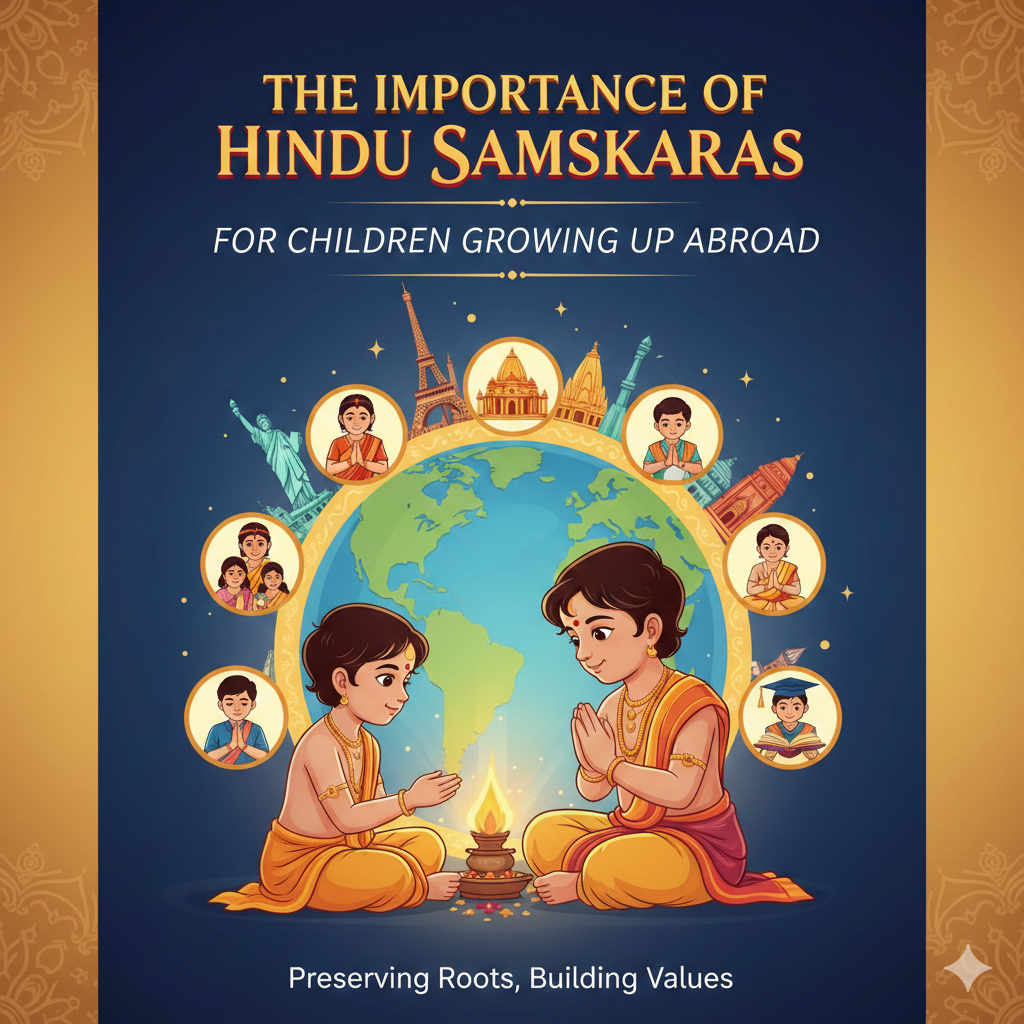
The Importance of Hindu Samskaras for Children Growing Up Abroad
Raising children in a foreign land is a beautiful yet challenging journey. For millions of Indian families living in the USA, Canada, UK, Australia, and beyond, one question repeats itself silently in their hearts:
“Will my children understand our culture as deeply as we did?”
This emotional worry has given rise to a renewed interest in Hindu samskaras — sacred life-cycle rituals that shape the emotional, spiritual, and moral foundation of a child from birth to adulthood.
From the Namakaranam (naming ceremony) to Upanayanam (sacred thread), these rituals are not just cultural events. They are powerful moments of identity, belonging, and blessing. And for children growing up abroad, they become even more important.
In this 1000-word guide, we explore why samskaras matter so deeply — and how parents abroad can keep this tradition alive with the help of experienced priests like Vedabrahma Sri Lalitha Krishna Shastry of nChinduPriest.com.
What Are Hindu Samskaras and Why Are They Important?
Samskaras are sacred rites of passage that mark key stages of life—from birth, education, marriage, to spiritual maturity. They are mentioned in:
-
Vedas
-
Upanishads
-
Grhya Sutras
-
Smritis
Traditionally, 16 samskaras are considered most important (Shodasha Samskaras).
They serve three main purposes:
Purify the mind and soul
They bless the child with divine protection at every stage.
Prepare children for future responsibilities
Every ceremony carries symbolic meaning—discipline, learning, family values, spiritual growth.
Preserve cultural identity across generations
They connect children emotionally to their roots, even while living abroad.
For diaspora families, samskaras become a cultural anchor.
Why Samskaras Matter More for Children Growing Up Abroad
They Strengthen Cultural Identity
Children raised in Western countries are surrounded by diverse communities and lifestyles. It’s easy to feel culturally lost.
Samskaras remind them:
-
Who they are
-
Where they come from
-
What their heritage means
A child who participates in their cultural rituals grows with pride and confidence in their roots.
They Create Emotional Bonding With Family Values
Samskaras are moments where:
-
Parents
-
Grandparents
-
Aunts & uncles
-
Family friends
-
Community members
…all come together in joy.
These moments build a child’s emotional memory, helping them feel connected to family even when living far away from India.
They Offer Spiritual Protection
According to Hindu tradition, samskaras invite divine grace into the child’s life.
Mantras chanted during rituals bless the child with:
-
Good health
-
Intelligence
-
Prosperity
-
Longevity
-
Strength of character
In a world filled with distractions, children need spiritual grounding more than ever before.
They Teach Discipline, Learning, and Respect
Many samskaras—like Vidyarambham or Upanayanam—instill values of:
-
Respect for educators
-
Importance of learning
-
Self-discipline
-
Focus and determination
Western education teaches skills.
Samskaras teach character.
They Preserve Sanskrit and Vedic Heritage
Children exposed to mantras early in life often:
-
Learn slokas faster
-
Develop better memory
-
Improve concentration
-
Feel spiritually stronger
Hearing sacred sounds during samskaras enriches their inner world.
Important Samskaras for Children Abroad
Let’s explore the major samskaras parents in the USA perform with priests like Sri Lalitha Krishna Shastry.
Namakaranam (Naming Ceremony)
Performed usually on the 11th or 21st day after birth.
Significance:
-
Blesses the child with identity
-
Invokes divine protection
-
Aligns the child’s name with their nakshatra
For children in the USA, this ceremony beautifully introduces them to the family’s spiritual heritage.
Annaprasana (First Solid Food Ceremony)
Performed when the baby is 6–8 months old.
Significance:
-
Prayers for good health
-
Blessings for nourishment and growth
-
Symbolizes the child entering a new phase
In many homes abroad, Annaprasana becomes a touching emotional moment—parents celebrating tradition miles away from homeland.
Chudakarana (Mundan Ceremony)
A ritual for purification and healthy growth.
Benefits:
-
Removes negativity from past births
-
Promotes good health
-
Symbolically represents shedding of impurities
Many parents feel a deep emotional connection when performing Mundan for their child abroad.
Vidyarambham
One of the most important samskaras.
The priest initiates the child into learning by writing:
“Om” or “Aum Namah Shivaya”
or
“Sri Rama” “Sri Krishna”
on rice or a slate.
Benefits:
-
Blessings for intelligence
-
Sharp memory
-
Academic success
-
Discipline and wisdom
For families abroad, this ceremony helps children value education as a spiritual responsibility—not just academics.
Upanayanam
Performed usually at age 7–16 for boys (in some traditions for girls too).
Purpose:
-
Initiates the child into Vedic learning
-
Teaches Gayatri Mantra
-
Introduces daily discipline
-
Symbolizes spiritual maturity
For children abroad, this becomes a guiding force—teaching responsibility, humility, and inner strength.
How Samskaras Nurture Emotional and Spiritual Intelligence
Children who grow up experiencing rituals develop:
Emotional Intelligence
-
Empathy
-
Gratitude
-
Family values
Spiritual Awareness
-
Understanding of divine energy
-
Respect for all life
-
Clarity of purpose
Moral Strength
-
Self-discipline
-
Courage
-
Compassion
Cultural Confidence
They feel proud of their heritage, not embarrassed by it—this is a gift only parents can give.
The Role of Priests in Preserving Samskaras Abroad
Performing samskaras authentically requires:
-
Knowledge of Vedic mantras
-
Understanding regional traditions
-
Guidance on procedures
-
Accurate sankalpam
-
Proper materials and timings
Priests like Sri Lalitha Krishna Shastry offer:
-
Telugu, Tamil, Kannada, Sanskrit mantras
-
Detailed explanations
-
Personalized rituals
-
Friendly approach for children
-
Proper Vedic procedure
This ensures samskaras remain meaningful, memorable, and spiritually powerful.
Conclusion: A Gift Every Parent Must Give
In foreign lands, traditions don’t continue automatically.
They survive only when parents actively preserve them.
Hindu samskaras:
-
Build identity
-
Strengthen character
-
Bring divine blessings
-
Create emotional memories
-
Keep culture alive
For children growing up abroad, these rituals become priceless treasures—gifts of love and legacy from their parents.
With experienced priests and dedicated families, the light of Sanatana Dharma continues to shine across oceans.



